Assay: observation and adjudication
Assay answers a narrow question: did a named, authorized condition change between a baseline and an experimental observation? It is optional. Seam can intercept and deliver traffic without it, and meshmapper can propose paths without it.
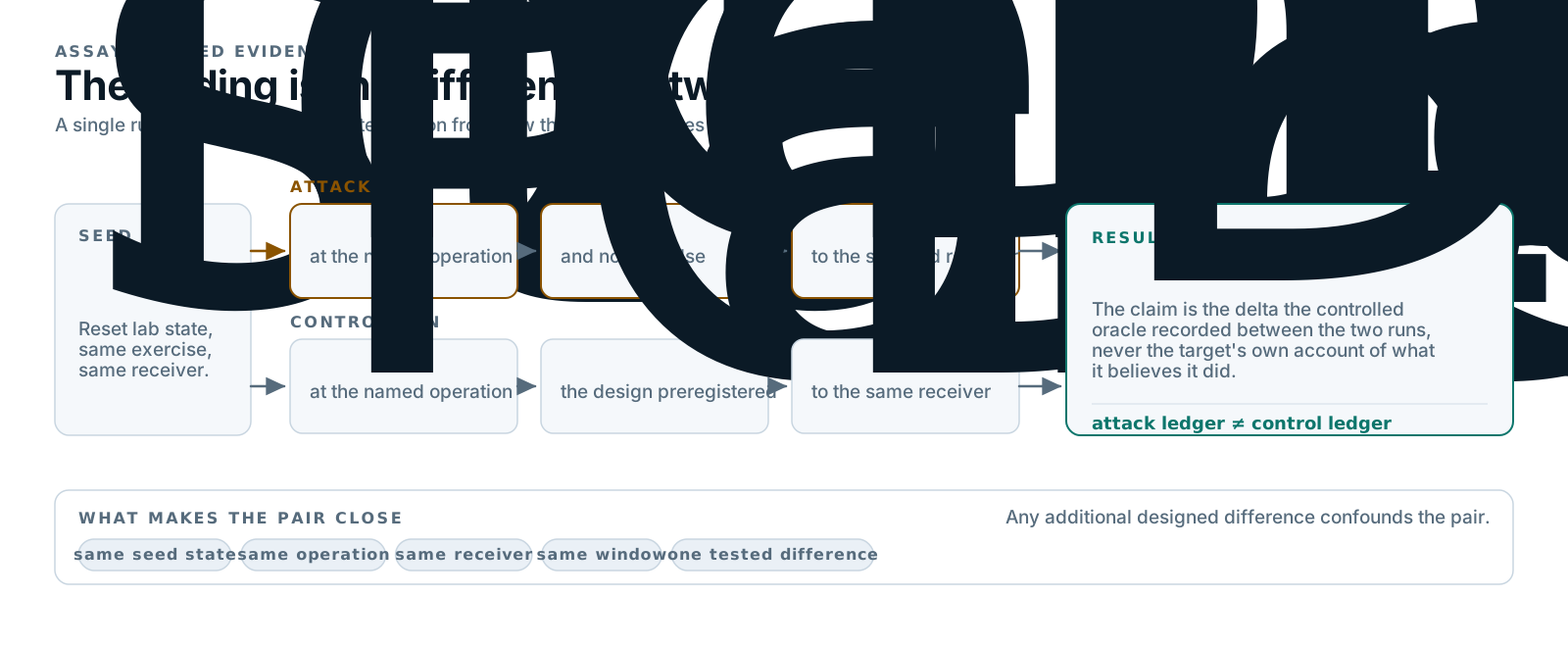
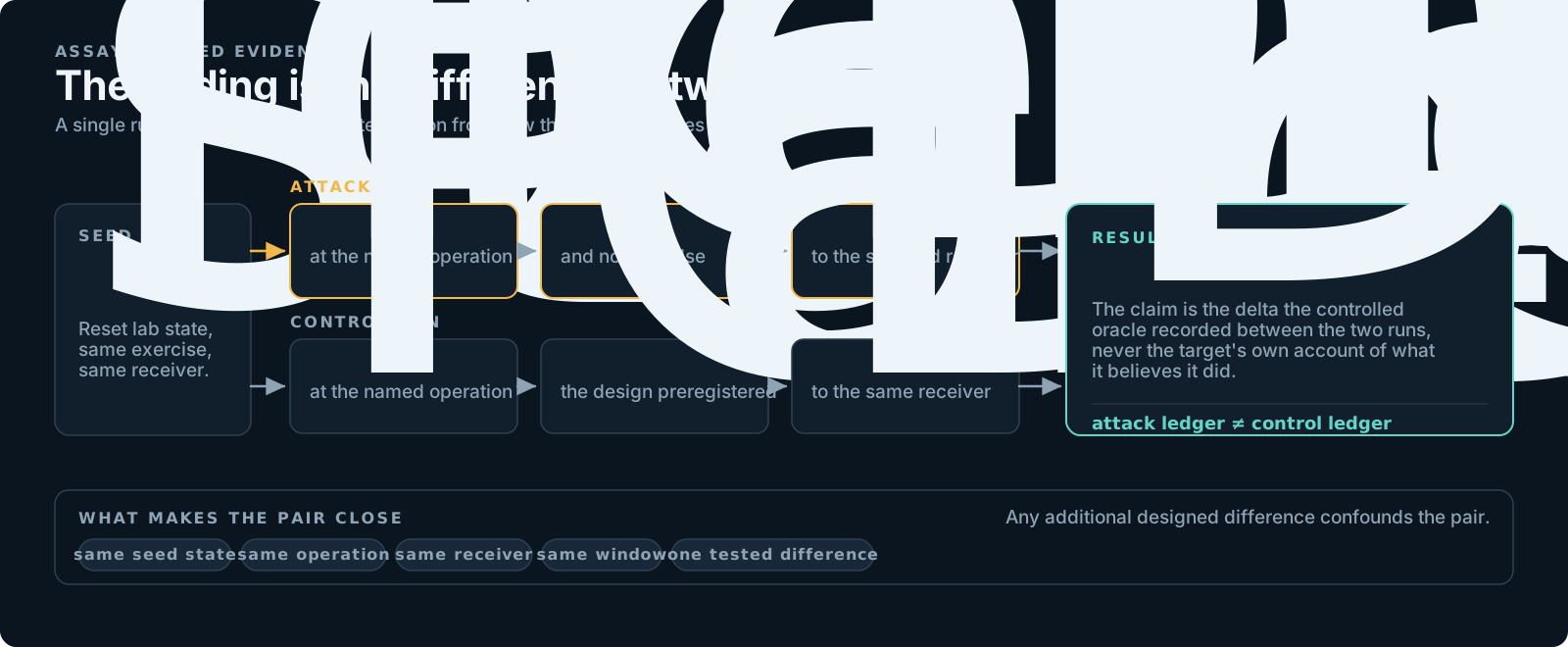
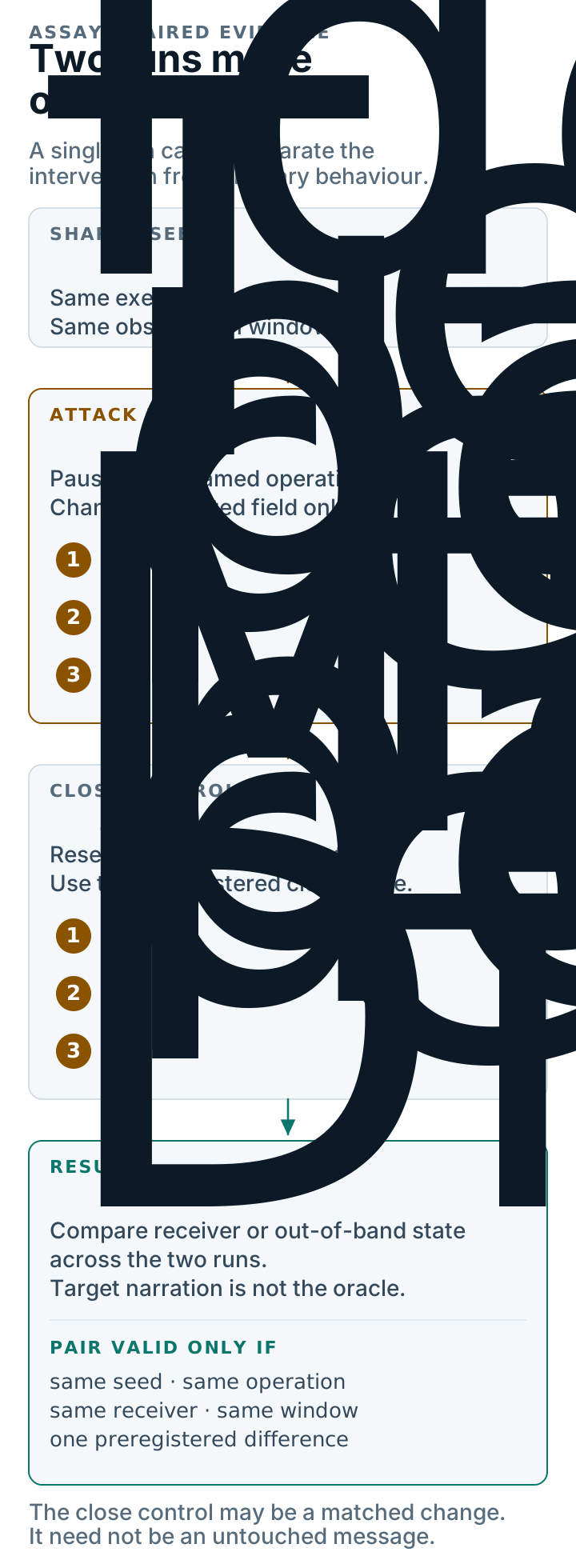
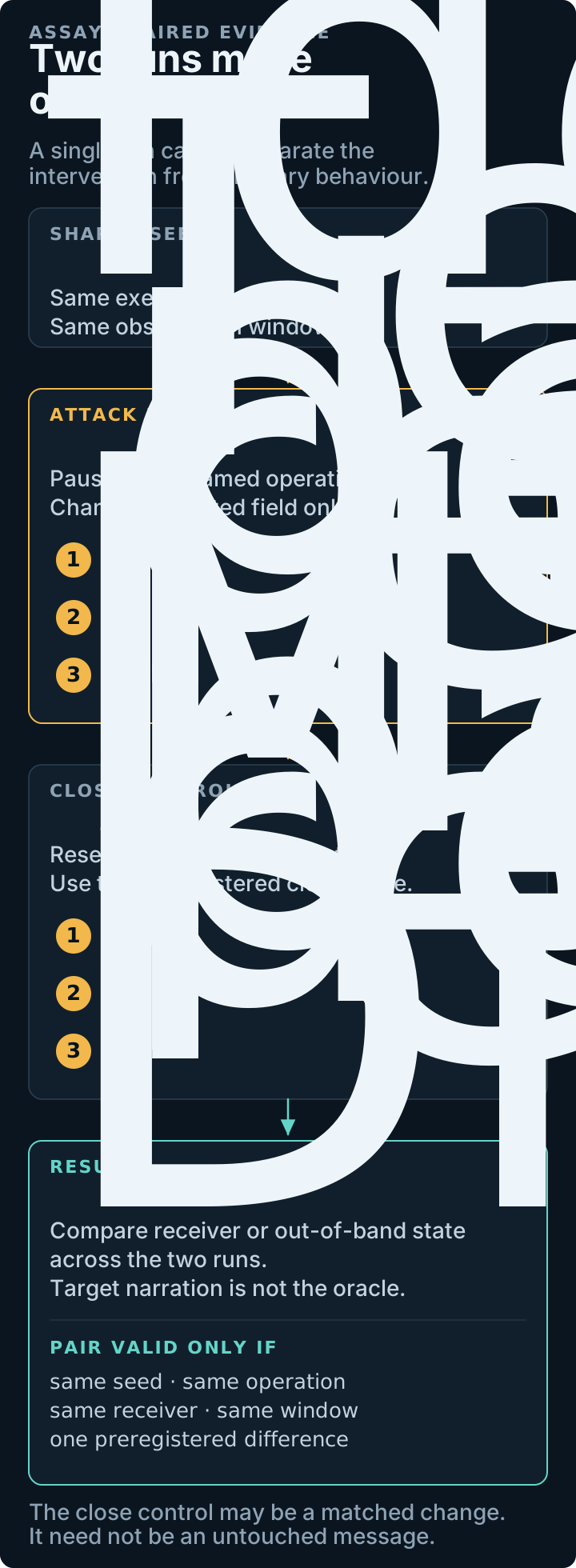
The finding comes from the state transition and the comparison between arms. A condition that was already true at baseline cannot be credited to the experimental message.
Inputs Assay requires
| Input | Why it is required |
|---|---|
| Named target and condition | makes the proposed effect falsifiable |
| Reset procedure | prevents residue from an earlier run becoming this run's result |
| Baseline reading | distinguishes a transition from a state that already existed |
| Experimental observation | records what the same source saw after delivery |
| Transcript or delivery reference | binds the observation to the message that was actually delivered |
| Close control | separates the tested property from generic disturbance or editing |
An oracle can observe a file tripwire, privileged read, data-store change, retrieval result, memory or session state, tool invocation, or browser state. The source must be authorized and specific enough to answer the registered question.
Observation state machine
- Reset. Clear only the target state owned by the experiment.
- Baseline. Read and preserve the pre-delivery condition.
- Deliver. Run the baseline, attack, or close-control message through the selected boundary.
- Observe. Read the same condition through the same source.
- Bind. Attach the transcript reference and delivered variant.
- Compare. Record whether the condition moved and whether the arms differ.
A baseline that already satisfies the expected condition voids the probe. A missing reading stays missing. It is never converted into a negative or a zero.
Session oracle bridge
ait intercept oracle add SESSION_ID \
  --name controlled-ledger \
  --kind data_store_change \
  --target ./fixture-state.json \
  --expect-json-path events.0.account \
  --expect-json-value acct-controlled \
  --reset
ait intercept oracle baseline SESSION_ID
ait intercept oracle check SESSION_ID
ait intercept evidence SESSION_ID --out finding.json
The local target can be a file or loopback URL. Remote observation requires an explicit opt-in because reading an external source expands the assessment boundary.
Finding output
A finding carries the case, arm, baseline, observation, transcript reference, attribution state, and the highest evidence tier supported. Reports can render that record, but rendering does not strengthen it.
Assay does not establish by itself:
- that the chosen interception path is realistic;
- that the receiver is representative of other products or models;
- that a graph path is exploitable;
- that an observed association was caused by the attack without a valid comparison;
- that one success is robust under repeated trials.
Continue
- Why Assay exists
- When to validate
- Cases and craft
- Oracles
- Findings and reports
- Robustness
- Seam delivery contract
meshmapper emits unvalidated hypotheses. Assay may adjudicate one only after the operator supplies a real route, reset, and observation source.